Foods That Support Hormonal Balance Naturally
Jun 17, 2026
Your hormones are talking to you.
They speak through your mood, your energy, your skin, your cycle, your sleep and your cravings. When things feel off, when you're exhausted for no clear reason, when your emotions feel bigger than the moment, when your body seems to be doing something entirely different than it used to, that is your hormonal system asking for attention.
And food is one of the most direct ways to answer that call.
This is Post #6 in the Food Is Medicine series. Today we're talking about hormonal imbalance. What it actually means, how it shows up in your body and which foods support your hormones at the deepest level.
What Hormonal Imbalance Actually Means
Hormones are chemical messengers produced by your endocrine glands including your thyroid, adrenals, ovaries and pancreas. They regulate nearly every function in your body: metabolism, mood, reproduction, sleep, digestion, immune response and more.
Hormonal imbalance happens when there is too much or too little of a hormone in your bloodstream. Even small shifts can have significant effects on how you feel day to day.
Common signs of hormonal imbalance include:
- Fatigue that doesn't improve with rest
- Mood swings, anxiety or depression
- Weight changes especially around the midsection
- Irregular or painful periods
- Brain fog and difficulty concentrating
- Skin breakouts or dryness
- Sleep disruption
- Low libido
- Hot flashes or night sweats
- Hair thinning
These symptoms are common but they are not something you simply have to accept. What you eat, how you move, how you manage stress and how well you sleep all directly influence your hormonal environment.
The Root Causes Worth Knowing
Before we get into food, it helps to understand what tends to drive hormonal imbalance in the first place.
Estrogen dominance is one of the most common hormonal patterns, particularly for women in their 30s and 40s. It happens when estrogen levels are high relative to progesterone and can be driven by excess body fat, chronic stress, poor gut health, a diet low in fiber and exposure to endocrine-disrupting chemicals found in plastics, conventional produce and certain personal care products.
Cortisol dysregulation happens when chronic stress keeps cortisol elevated for too long. This disrupts the production of other hormones including progesterone, thyroid hormones and insulin. When cortisol is high everything else pays the price.
Insulin resistance develops when cells stop responding to insulin efficiently. Blood sugar becomes unstable and the resulting hormonal cascade affects everything from your menstrual cycle to your mood to your energy.
Perimenopause and menopause is the natural hormonal transition that begins as early as the late 30s and typically deepens in the 40s. Estrogen and progesterone levels shift significantly during this time. This transition is normal and natural and how you nourish your body through it matters tremendously.
Foods That Support Hormonal Balance
Cruciferous Vegetables Broccoli, cauliflower, Brussels sprouts, cabbage, kale and arugula contain a compound called indole-3-carbinol that supports the liver's ability to metabolize and clear excess estrogen from the body. Eating cruciferous vegetables several times a week is one of the most evidence-based dietary strategies for estrogen balance.
Flaxseeds Flaxseeds are the richest plant source of lignans - phytoestrogens that bind to estrogen receptors and help modulate estrogen activity in the body. They support hormone detoxification through the gut and have been shown to help regulate cycles and reduce hot flash frequency. Ground flaxseed is best. Add it to smoothies, oatmeal or salad dressings daily.
Leafy Greens Spinach, collards, Swiss chard and dandelion greens are rich in magnesium which is a mineral that supports progesterone production, reduces PMS symptoms, improves sleep and helps regulate cortisol. Most women are deficient in magnesium and don't know it. Dark leafy greens eaten daily are one of the most powerful ways to address this.
Healthy Fats (Avocado, Walnuts) Hormones are made from fat. Without adequate dietary fat your body cannot produce hormones efficiently. Avocado, walnuts, hemp seeds and cold-pressed olive oil provide the building blocks your endocrine system needs. These fats also support the absorption of fat-soluble vitamins like vitamin D which is critical for hormonal health.
Berries Blueberries, raspberries and strawberries are rich in antioxidants that reduce oxidative stress and inflammation both of which disrupt hormonal signaling. Their natural fiber content also supports gut health. A healthy gut is essential for proper hormone metabolism and clearance.
Legumes Lentils, chickpeas, black beans and edamame are excellent sources of plant-based protein and fiber. Adequate protein is essential for hormone production and blood sugar stability. Their fiber content feeds beneficial gut bacteria that play a direct role in estrogen metabolism.
Seeds (Pumpkin and Sunflower) Seed cycling is a practice rooted in the idea that different seeds support different hormones at different phases of the menstrual cycle. Pumpkin seeds are rich in zinc which supports progesterone production in the second half of the cycle. Sunflower seeds are rich in vitamin E and selenium which support liver detox and thyroid function.
Herbs and Adaptogens Certain herbs have a long history of use for hormonal support. Vitex (also called chaste tree berry) supports progesterone production and has been used traditionally for PMS, irregular cycles and perimenopausal symptoms. Ashwagandha is a well-researched adaptogen that helps regulate cortisol and supports thyroid function. Dandelion root supports liver detox and estrogen clearance. Nettle leaf is deeply nourishing for the endocrine system overall.
What to Reduce
These foods work against hormonal balance.
Refined sugar and processed carbohydrates spike blood sugar and insulin creating a hormonal cascade that affects cortisol, estrogen and progesterone.
Conventional dairy and meat can contain synthetic hormones and antibiotics that disrupt your own hormonal environment.
Alcohol impairs liver function, which is responsible for metabolizing and clearing excess estrogen. Even moderate consumption can contribute to estrogen dominance.
Highly processed foods often contain endocrine-disrupting additives, seed oils and preservatives that interfere with hormonal signaling.
Excess caffeine can elevate cortisol and disrupt sleep both of which have downstream effects on your hormonal health.
A Simple Daily Framework
You don't have to overhaul everything at once. Start here:
Morning: Ground flaxseed in your smoothie or oatmeal. Hydrate before you caffeinate.
Midday: Build your plate around leafy greens, a legume and a healthy fat. Color is your guide.
Snack: A handful of walnuts or pumpkin seeds with fruit.
Evening: Keep it light and anti-inflammatory. Cooked cruciferous vegetables, a simple grain and an herbal tea that supports your liver or nervous system.
Daily non-negotiables: Fiber, water, adequate protein and something green.
A Note on This Season of Life
If you are in your 30s, 40s or beyond and your body feels like it's doing something new, it probably is. Perimenopause is a natural transition and it deserves to be met with nourishment not fear.
The plants are here to support you through every season. That has always been true.
Next week we're going deep on gut health and bloating because your gut and your hormones are more connected than most people realize. Stay tuned.
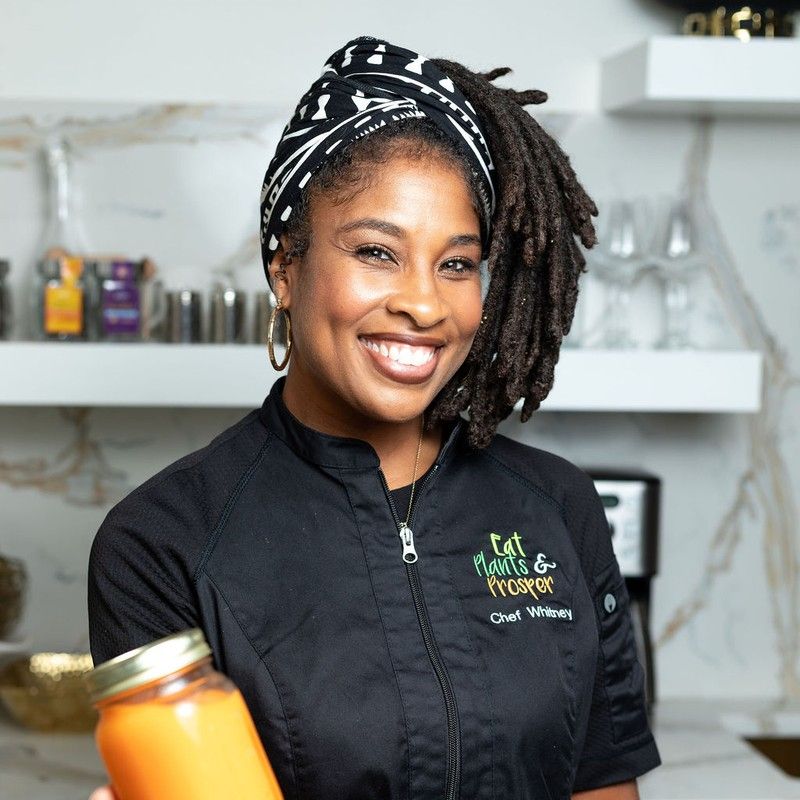
Whitney is a certified holistic nutritionist, plant-based chef, raw juice alchemist and certified yoga instructor. She is the founder of Eat Plants & Prosper.
You're Invited.
Join the Eat Plants & Prosper community and get weekly plant-based recipes, wellness tips, and nourishing inspiration delivered straight to your inbox.