The Fiber Gap: What Most People Are Missing (And Why It Matters More Than You Think)
Feb 26, 2026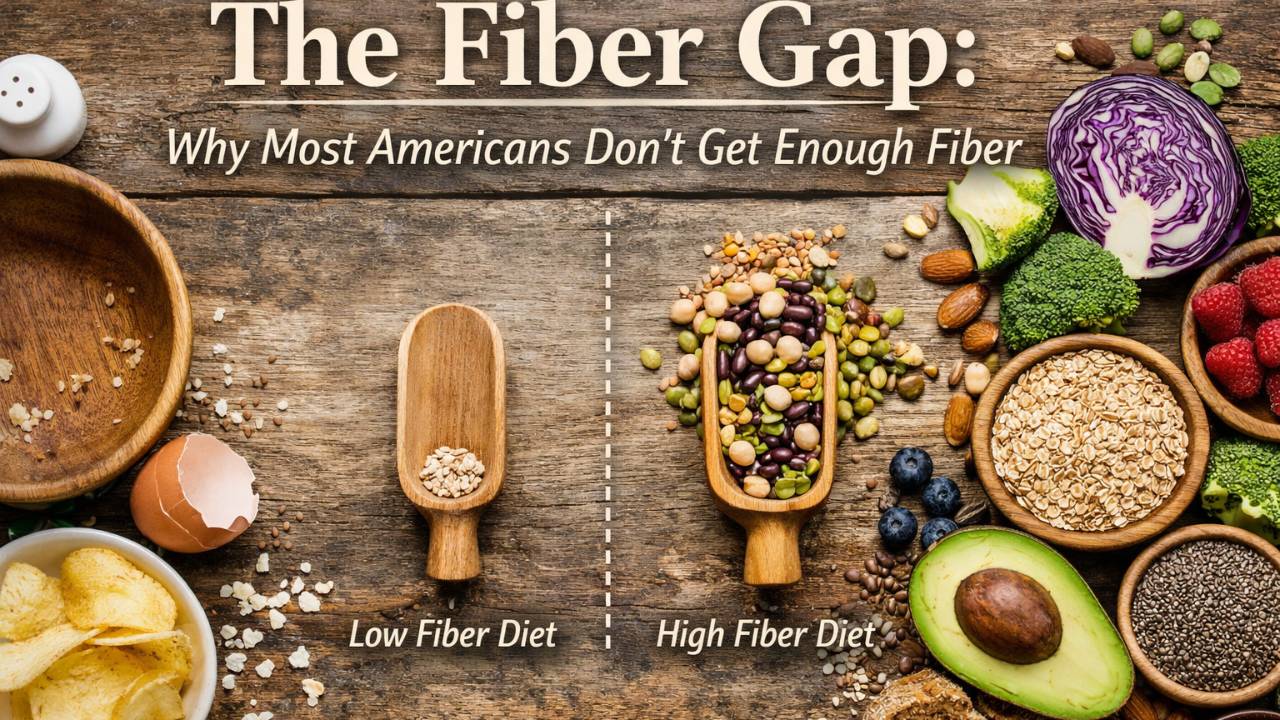
When most people decide to “eat better,” the first thing they focus on is protein.
More protein.
Protein at every meal.
Protein snacks.
But one of the most common nutritional gaps has nothing to do with protein at all.
It’s fiber.
The average adult should be getting somewhere between 25–35 grams of fiber each day. Yet estimates suggest that fewer than 10% of Americans meet recommended fiber intake — with some analyses putting that number closer to 5–6%.
That means the vast majority of people are under-consuming one of the most important nutrients for supporting digestion, metabolic health, and the balance of the gut microbiome.
And fiber isn’t just about digestion.
It plays a role in:
-
Supporting a healthy gut microbiome
-
Helping regulate blood sugar
-
Assisting the body in managing cholesterol
-
Feeding beneficial bacteria that influence inflammation and immunity
-
Supporting consistent elimination
-
Contributing to long-term digestive and metabolic health
In other words, fiber helps create the internal environment that allows many other systems to function well.
The body relies on regular exposure to plant fibers to maintain balance. Without that consistent input, the microbiome becomes less diverse, and digestion can become less efficient over time.
That doesn’t require a dramatic overhaul.
It requires consistency.
And fiber isn’t just about digestion.
How to Start Closing the Fiber Gap
Increasing fiber doesn’t require starting over. The most sustainable approach is to layer it into meals you already enjoy.
Start With What You Can Add
Instead of asking what to remove, ask what plant food you can include.
Add:
- A handful of leafy greens to lunch
- Beans or lentils to a salad or bowl
- Chopped vegetables alongside meals you already make
- Small additions build quickly.
Think in Terms of Plant Diversity
Different fibers feed different beneficial bacteria.
Rotate foods like:
Greens (kale, arugula, spinach)
- Cruciferous vegetables (broccoli, cabbage, cauliflower)
- Legumes (lentils, chickpeas, black beans)
- Whole grains (oats, quinoa, brown rice)
- Seeds (chia, flax, pumpkin)
Variety matters as much as quantity.
Think in Terms of Plant Diversity
Starting the day with fiber can help regular appetite and digestion.
This might look like:
Chia pudding with fruit
Oats topped with pumpkin seeds
A fruit smoothie with hemp seeds
Don’t Forget Hydration
Fiber works best when paired with adequate fluid. Water helps fiber move comfortably through the digestive system and supports elimination.
Increase Gradually
If your current intake is low, you may need to add fiber slowly so the body can adjust. This allows the gut microbiome to adapt and helps avoid unnecessary discomfort.
Over time, these simple shifts can meaningfully influence digestion, energy, inflammation levels, and long-term health.
And often, supporting the body well is less about dramatic detoxes — and more about consistently including what it actually needs.
As we move into spring, this is one of the simplest foundations to focus on: adding plant diversity and building digestive rhythm.
xo,
Whitney
You're Invited.
Join the Eat Plants & Prosper community and get weekly plant-based recipes, wellness tips, and nourishing inspiration delivered straight to your inbox.